
Landing Page or Full Website? They Don't Do the Same Job
The wrong choice can easily burn through half your ad budget. What a landing page is really for, when you need a full website, and how they fit together in a campaign.
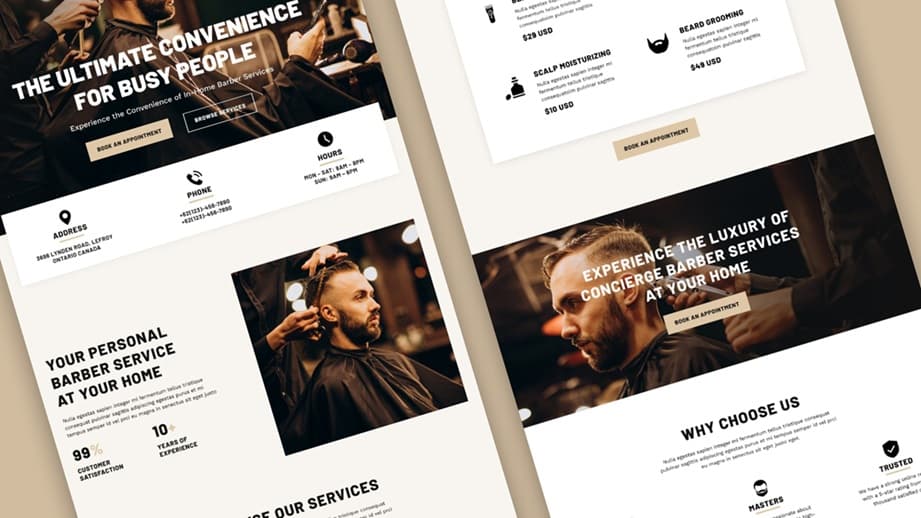
Almost everyone gets stuck on the same question before launching an ad campaign: should I send the visitor to my existing website, or build a separate, purpose-built landing page? The two aren't substitutes for each other — they're two different tools — and the wrong choice can easily burn through half your ad budget without you ever seeing it show up in revenue.
What a landing page is really for
A landing page is built for a single purpose: it presents one very specific offer to one very specific group of visitors, and drives them toward a single action — signing up, requesting a quote, booking. There's no menu, no links to ten other subpages, nothing that could pull attention away from the main goal. This strict focus is what lets a good landing page's conversion rate run many times higher than a general website's — not because it's prettier, but because it leaves no other path but the one you want.
This focus becomes truly valuable when your ad and your landing page's message are perfectly aligned. If the ad promises "30% off the spring collection" and the visitor lands on the homepage after clicking, with no trace of that discount anywhere, you instantly lose their trust — and the ad spend along with it. The landing page continues exactly the message the ad started, with the same words, the same visual language.
When you need a full website
A full website solves a different problem: it doesn't optimize for a single offer, it builds trust and answers every question a potential customer might arrive with. This includes showcasing references, detailing your services, an about page, contact options across multiple channels, and typically a blog too, which builds search visibility over the long term. The website is the place someone comes back to when they're already close to a decision and want to double-check something about you one last time — while the landing page belongs more to that first-impression moment.
Their roles differ from an SEO perspective too. The website is what Google indexes and ranks over the long term — invest content and technical fundamentals here, and it generates organic traffic over months and years. A landing page, by contrast, is typically built on paid traffic: the ad brings the visitor, the page converts, and as soon as the campaign stops, the page's traffic stops with it. That's not a flaw — it follows from its role — but you shouldn't rely on a landing page for long-term organic growth.
In practice: how they work together
Most well-functioning digital presences don't choose between the two — they use both, each in its own role. The website is the permanent base that's always there, keeps growing, and brings in organic traffic. Landing pages, on the other hand, are built separately for each campaign, each offer, each audience — a Christmas promotion, a new service launch, a webinar each gets its own new, targeted page that carries the website's design language but focuses on its own, unique offer.
A landing page has one job; if you try to give it more than one job, it'll do both of them badly.
A practical rule of thumb: whenever you launch a paid ad with a specific offer, always build a dedicated landing page for it, even a simple one. The extra cost is minimal compared to how much ad budget you save by not letting the visitor get lost in a ten-item menu before they decide.
If you're planning a campaign right now and aren't sure whether your existing site is enough, or whether you need a dedicated landing page, let's take a look together — it can usually be decided in a few minutes.